HBM122: Should Cows Have Names?

Should Cows Have Names?
Here Be Monsters Podcast
 

Mike Paros lives in two worlds. In one world, he’s an animal welfare specialist and mixed animal vet, meaning he works with both “companion” animals like cats and dogs, and large animals like horses, cows, goats, and sheep. He spends much of his time as a veterinarian working with animals that eventually become meat, and most of his human clients are farmers that lean right politically.

Content Note: This episode includes sounds of calves being de-horned and castrated. Also strong language.

In the other world, Mike is a college professor at the Evergreen State College in Olympia, Washington. There he teaches anthrozoology and agriculture to a predominantly liberal student body -- lots of vegans and anarchists. Crossing back and forth between these two worlds invites Mike to have many discussions about how to ethically treat animals, within and outside of the meat industry.


Producer Bethany Denton spent a day shadowing Mike as he disbuds and castrates dairy calves, and she asks him whether he thinks meat can be eaten ethically. Bethany also interviewed Mike in 2018 about a class he was teaching called “Liberal Education in the College Bubble: Crossing the Political and Cultural Divide.”

Producer: Bethany Denton
Editor: Jeff Emtman
Music: The Black Spot, Circling Lights
Images: Bethany Denton

 
Can O Worms Optimized Gif squareish.gif

NEW STICKER!

Designed by Violet Reed.

HBM120: Own Worst Interest

HBM120.jpg
Own Worst Interest
Here Be Monsters Podcast
 

In the fall of 1989, in Vancouver, Washington, a short, 29 year-old man named Westley Allan Dodd raped and murdered three young boys. The boys were brothers Cole and William Neer, ages 10 and 11, and four year old Lee Iseli.

Content Note:
Sexual violence, suicide and capital punishment

A few weeks later, police arrested Westley at movie theater after he tried and failed to abduct another boy. He quickly confessed to the three murders. The prosecution sought the death penalty, and Dodd pled guilty.

Death penalty cases take a long time due to all the appeals built into the process. These appeals are designed to make sure the state hasn’t made any mistakes in the death sentence. They check for things like juror misconduct, incompetent defense lawyers, new evidence. Death penalty cases take years, sometimes decades.

Westley Allan Dodd did not want that. Instead, he wanted to be executed as quickly as possible.

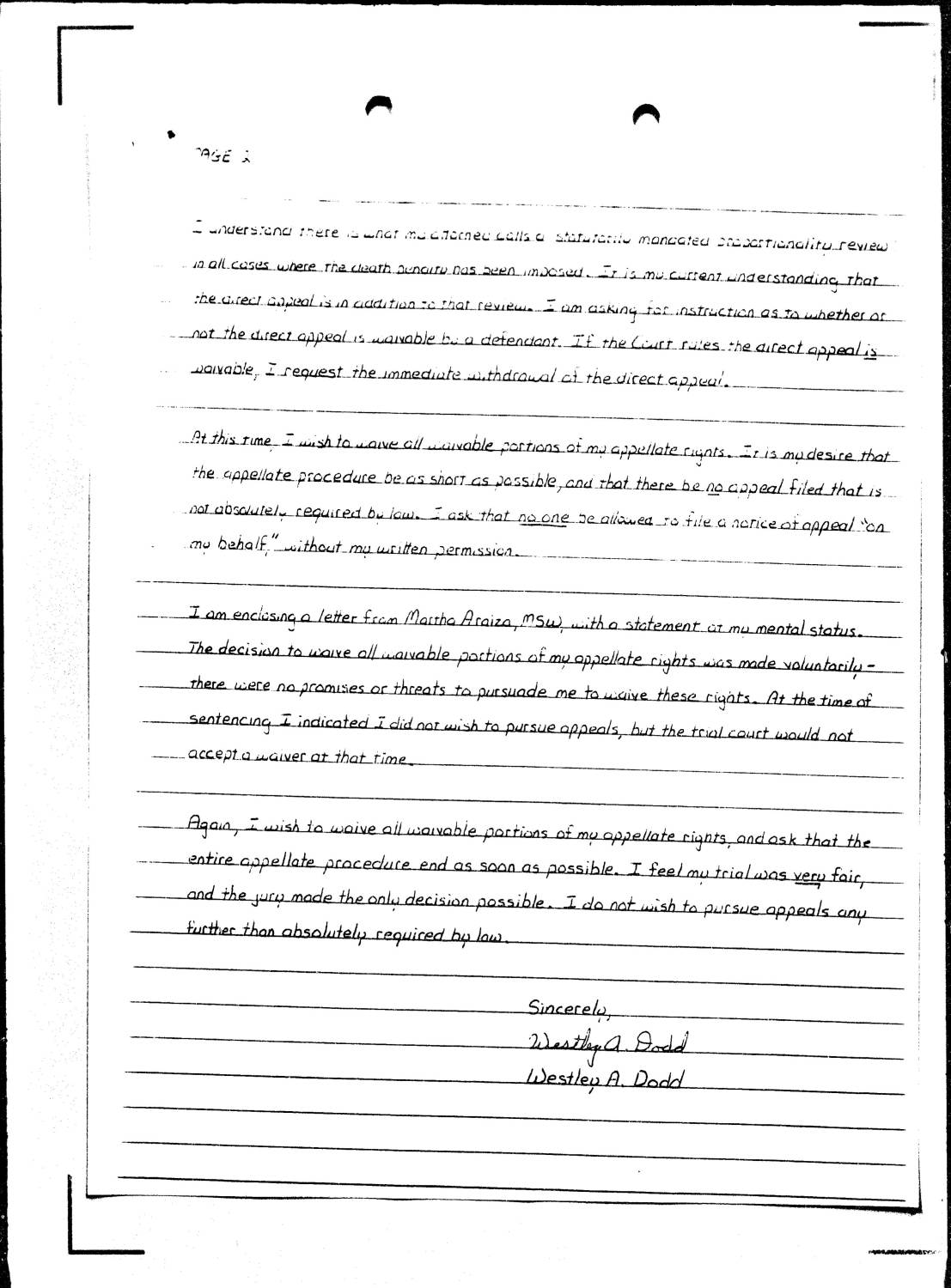
In letters to the Supreme Court of Washington, Dodd urged the court to allow him to waive his right to appeal his death sentence. He believed he deserved to die for what he did, and wanted it done as soon as possible. Dodd was what’s known as a “volunteer”–someone who gives up their rights in order to hasten their own execution. The Death Penalty Information Center cites about 150 cases of “volunteers” in the United States.

Dodd’s case sparked debate both among people who supported and opposed the death penalty. Some argued he had the right to choose whether the court would review the validity of his death sentence. Others argued that the law ensures that all defendants have due process whether they want it or not.

In the meantime, Dodd continued to advocate for his own execution in interviews and in exchanges with his pen pals. He said he felt remorseful, and even wrote a self-defense booklet for kids to learn how to stay safe from men like him. The booklet was called “When You Meet A Stranger”.

The debate made its way to the Washington Supreme Court.  In a 7-2 ruling, they decided that Dodd did, in fact, have the right to waive his remaining appeals. After just three years on death row (5 years shorter than the national average at that time) the State of Washington hanged Westley Allan Dodd.

On this episode Bethany Denton interviews  Dodd’s former attorney Gilbert Levy. And defense attorney Jeff Ellis, who was a young lawyer during the time of the Dodd trial.   Bethany also talks to Becky Price, who was one of the recipients of Dodd’s pamphlet  “When You Meet A Stranger”.

Producer: Bethany Denton
Editor: Jeff Emtman
Music:  The Black Spot


HBM113: The Last Ones

The Last Ones
Here Be Monsters Podcast
 

Bethany Denton’s been thinking about grief a lot lately. In 2017, two of her friends, a mother and a daughter, died unexpectedly just two months apart. Since then, Bethany’s started seeing grief in just about everything, including a caribou at Woodland Park Zoo that dropped her antlers after a miscarriage.

Content Note:
Death and Language

Bethany’s good friend, Jesse Brenneman has also been thinking a lot about grief. It was his mother and sister who died in 2017. And shortly after that, his grandfather and father died too. So over the span of a year and two months, Jesse lost his entire immediate family.

When Bethany told Jesse about the grieving caribou mother who’d dropped her antlers after miscarriage, Jesse suggested contacting his next door neighbor Ben Long. Ben is a writer and conservationist with an affinity for caribou.


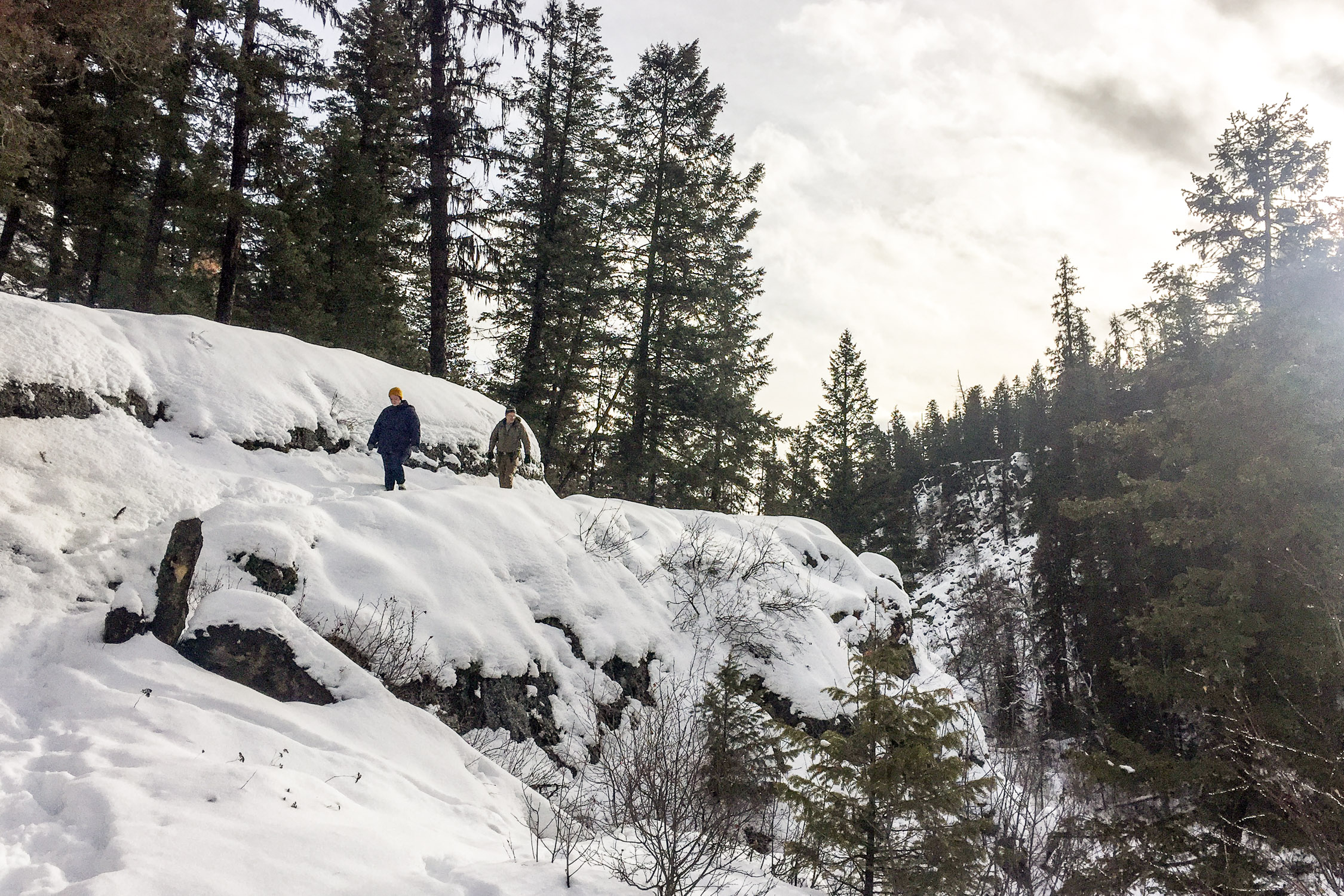
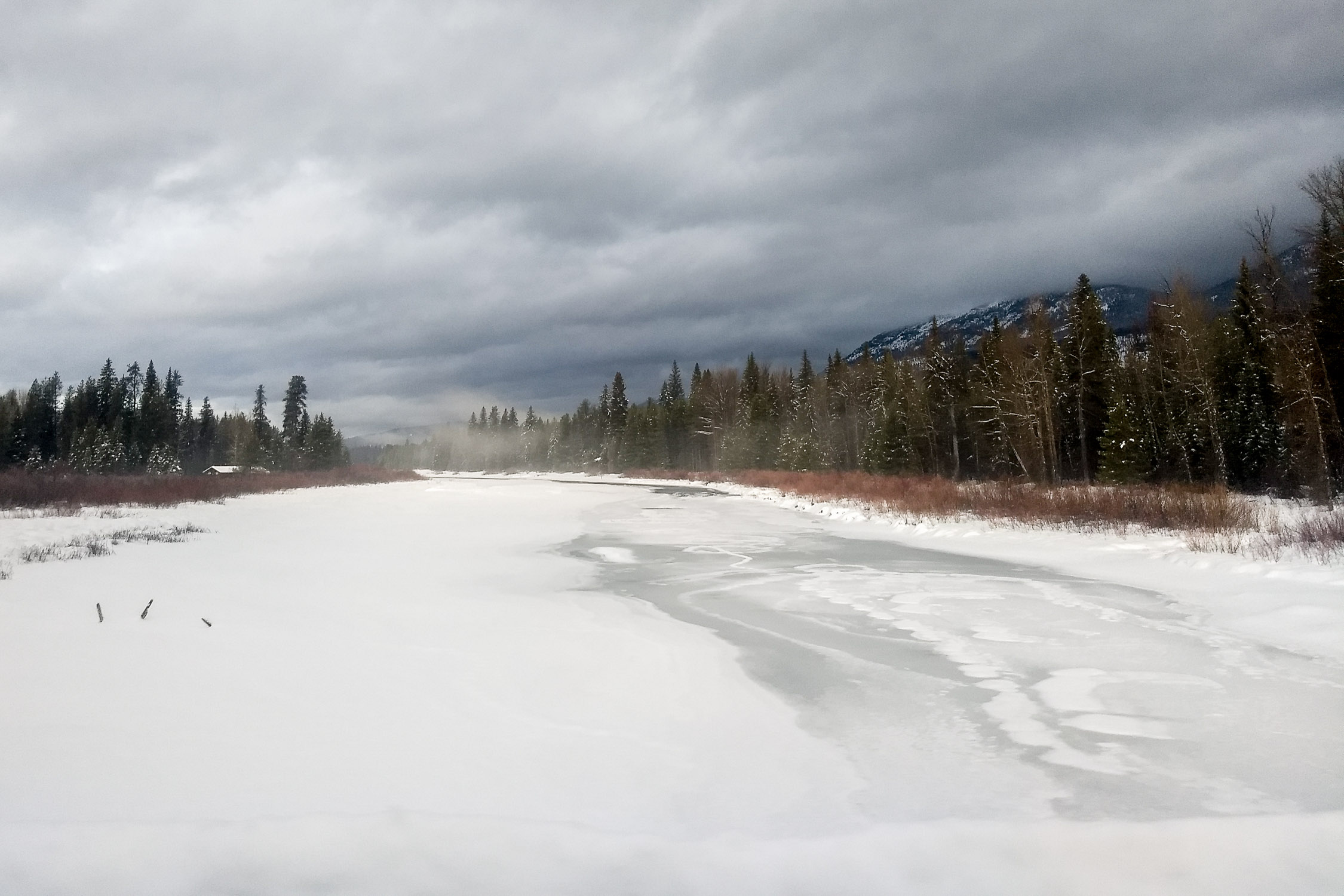
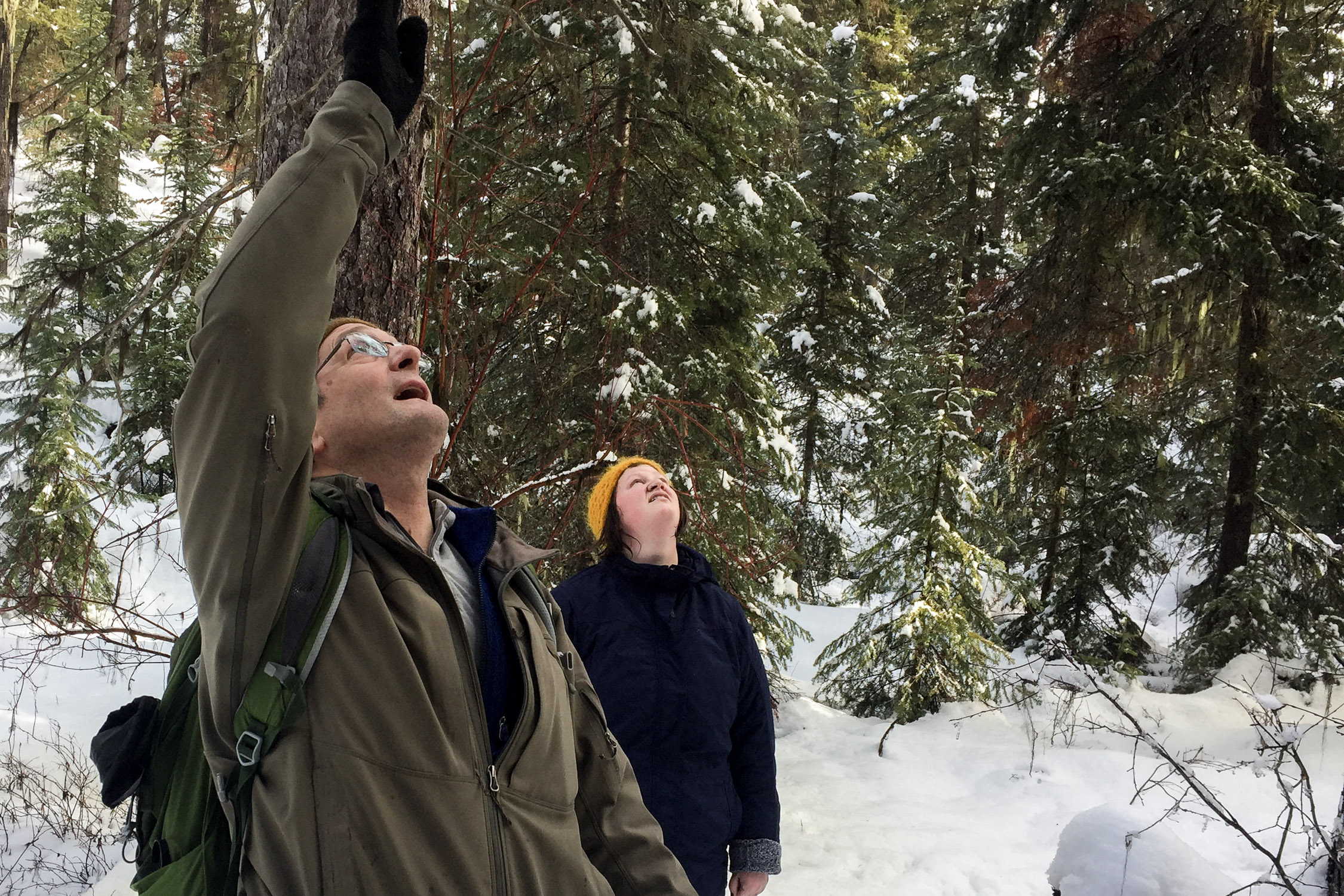
On a snowy January morning, the three of them drove out to the Flathead National Forest outside of Kalispell, Montana for a walk in the woods. They hoped to find caribou tracks in the snow. Caribou used to be plentiful in northwestern Montana and throughout the continental United States. These days, due to deforestation and destruction of their habitat, the caribou population in the lower 48 could be as low as three animals.

You may recognize Jesse’s voice from his time as a producer for WNYC’s On The Media. Today he is a freelancer of many disciplines living and working in Missoula, Montana.

Further Listening: HBM064: A Shinking Shadow, in which Bethany talks to Jesse’s sister Erin about her eating disorder.

Producers: Jesse Brenneman and Bethany Denton
Editor: Bethany Denton
Music: Jesse Brenneman and The Black Spot


HBM083: Sweet Like Snap Peas

Cemetery asparagus.  Photo by Jeff Emtman.

Cemetery asparagus. Photo by Jeff Emtman.

Sweet Like Snap Peas
Here Be Monsters Podcast
 

Ryan Graves thinks that store-bought asparagus is as flavorless as potatoes.  But that's just because he's spoiled on the really good stuff. 

His preferred crop grows wild among the tombstones at Clinton Cemetery, hidden on an old gravel road between the towns of Pullman, Washington and Moscow, Idaho.  Most who are buried there died over 100 years ago. 

That intervening century left the cemetery mostly forgotten and overgrown.  And Ryan thinks the deep-rooted asparagus taste so good because of the natural quality of their fertilizer.  

Ryan Graves thinks that store-bought asparagus is as flavorless as potatoes.  But that’s just because he’s spoiled on the really good stuff.

His preferred crop grows wild among the tombstones at Clinton Cemetery, hidden on an old gravel road between the towns of Pullman, Washington and Moscow, Idaho.  Most who are buried there died over 100 years ago.

Ryan Graves also appears on HBM042: Deers.  Jeff Emtman produced this episode.  

Music: The Black Spot 


We have a question for you:

What will be unknowable to the archaeologists 3 million years from now?  What is understandable only to people of today?  

Send a voice memo to HBMpodcast@gmail.com.  Or leave a message on our voicemail: (765) 374-5263.  We may include your audio in an upcoming episode.


HBM072: Ant God

Episode art by Jeff Emtman

Episode art by Jeff Emtman

Ant God
Here Be Monsters Podcast
 

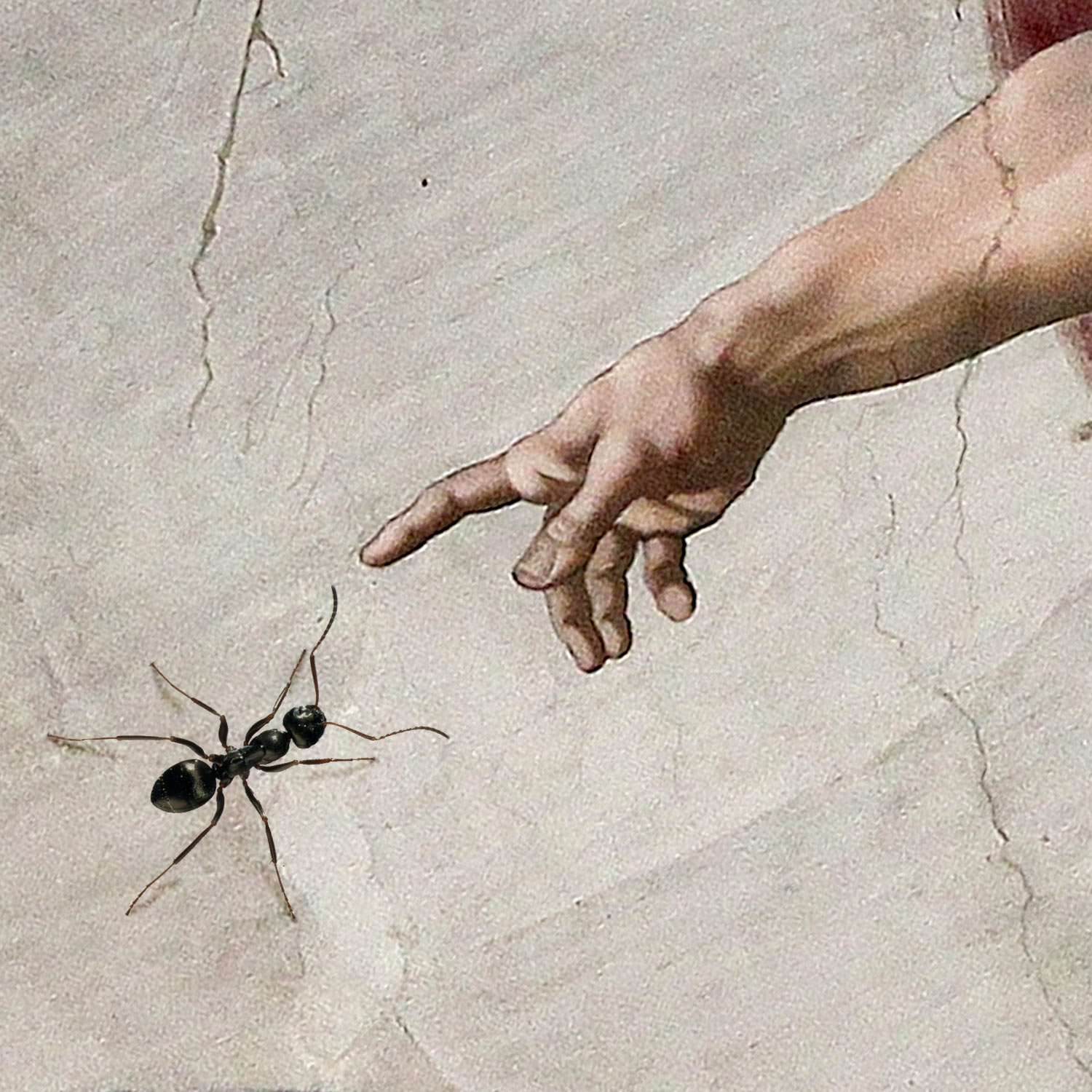
As far as gods go, Jacob Lemanski is more tepid than most.  Despite his omniscience, he feels unequipped to deal with the ethical decisions required of him.

Content Note: this episode contains a description of a domestic assault.

Jacob is the owner of AntLife, a company that makes large ant farms.  In one of his prototype farms, he was experimenting with different soil types.  One of his formulations caused a problem: tunnel collapse.  And during a cave-in, one of his ants became trapped in a small underground cavern, just inches from the surface.

In this episode, Jacob recalls his personal history with both passivity and intervention, and tries to figure out what’s best for his ants.  

Producer: Jeff Emtman
Editor: Bethany Denton
Music: The Black Spot


Jacobs ants live in an environment lit by programmable LEDs

Jacob’s newest ant farms have photos of nebulae as their backdrop.

HBM069: Redwoods of the In-World

HBM069.jpg
Redwoods of the In-World
Here Be Monsters Podcast
 

Ariadne, Jacqueline, North, and others unnamed are all part of the same system.  They share a single body.  They take turns “fronting” the body, controlling it.  And when they’re not fronting, the system members are free to roam an infinite landscape, a pocket reality that they call the “in-world”.

Content Note: Language and a description of a sexual assault.

Together, they go to work every day, spend time with friends and lovers, go to shows, play video games, and live many aspects of a typical life. But when multiple people with varying interests, social skills, and gender identities share a single body, some things are tough.  It’s tough to live in a world that doesn’t understand you, doesn’t know your secrets, or just wants to diagnose you.

The system members refer to their living situation as being “plural” or “multiple”.  Psychiatry calls similar situations Dissociative Identity Disorder.  The system members don’t identify with this diagnosis, as it requires the multiplicity to be hindrance.  They say it’s the opposite of a hindrance--it’s what lets them survive.

Another perspective on multiplicity can be found in the work of philosopher John Perry.  1978, he published a paper called A Dialogue on Personal Identity and Immortality which critiques popular assumptions of personal identity.  This writing was brought to our attention by Barry Lam, the producer of a soon-to-be released philosophy podcast called Hi-Phi Nation.  

We mailed our spare recorder to the system’s home in the spring of 2016.  Over the course of several months, system members created diary entries and field recordings to share the world that Ari calls too “bright and loud”.

Producer Jeff Emtman did an interview with Jacqueline, where she also described the building process of the in-world, including the creation a spot of reverence within it--a grove of redwood trees modeled on a forest near Oakland.

One day, Jacqueline hopes to move from the city to the wilderness and have dogs.  Jacqueline said that there are no current plans to integrate the system.

We found out about Ari, North, Jacqueline et al because we asked for listeners to tell us their secrets.   If you have a secret you’d like to share, please get in touch.

This episode was produced by Jeff Emtman and Bethany Denton.  Nick White is HBM’s editor at KCRW.  

Music: The Black Spot