HBM077: Snow on Date Trees, then on Pines

Photo of Tariq and Catherine

Photo of Tariq and Catherine

Snow on Date Trees, then on Pines
Here Be Monsters Podcast
 

Muhammad Tariq still doesn’t know who the men with guns were.  They wore masks on their faces when they came into the teachers’ lounge.  His small, gender-integrated school in Panjgur had been anonymously receiving literature that scolded them for teaching girls.  Tariq and the other teachers didn’t take it seriously until the six men showed up.

While they beat the maintenance worker with the butts of their guns and smashed the office’s computers, one of the masked men mentioned that he knew who Tariq was, that he knew Tariq’s history of educating Pakistani girls, his plans to turn them against true muslim religion and culture.  

After just fifteen minutes, they were gone again.  Tariq doesn’t know why they didn’t take him with them, as his province of Balochistan sees regular abductions and murders and sectarian violence (see documentary below).  Balochistan is also home to separatist movements, notably the hyper-nationalist Baloch Liberation Army.

 
Flag of Pakistan’s Balochistan Province

Flag of Pakistan’s Balochistan Province

Documentary on Balochistan conflict, from Al Jazeera


Estimates for numbers of the disappeared Baloch people vary greatly, from 1,000 to about 20,000.  Since 2010, Human Rights Watch has documented first hand accounts of disappearances, which often happen in broad daylight.

After the incident in his school, Tariq feared for his life; said he needed to get out of Pakistan.  So he applied for and received a J1 visa, a cultural exchange program run by the US State Department.  After the visa expires, J1 recipients are supposed to return to their home countries.  

In 2015, Tariq took a plane from Karachi to Washington DC, and when his J1 program was up, he filed for asylum with a personal certainty and faith that it would be granted to him.  The USCIS is supposed to schedule asylum interviews within 45 days, with a final decision within 180.  But (as of April 2017), the wait time for the initial asylum interview is an estimated 2 to 5 years.  

Until Tariq gets that interview, he’s in a state of limbo—legally allowed to stay in the United States, though unable to find good work or afford college.




Tariq moved to Seattle, where he met his fiancé, Catherine Adams.  She hadn’t ever met a Muslim before, and she had a conservative, christian upbringing in rural Oregon.  She'd only ever heard and seen negative stereotypes of men like Tariq before they met. But they fell in love quickly and are planning to get married late in the summer of 2017.  They’ve since moved to Catherine's small hometown of Medford, Oregon.

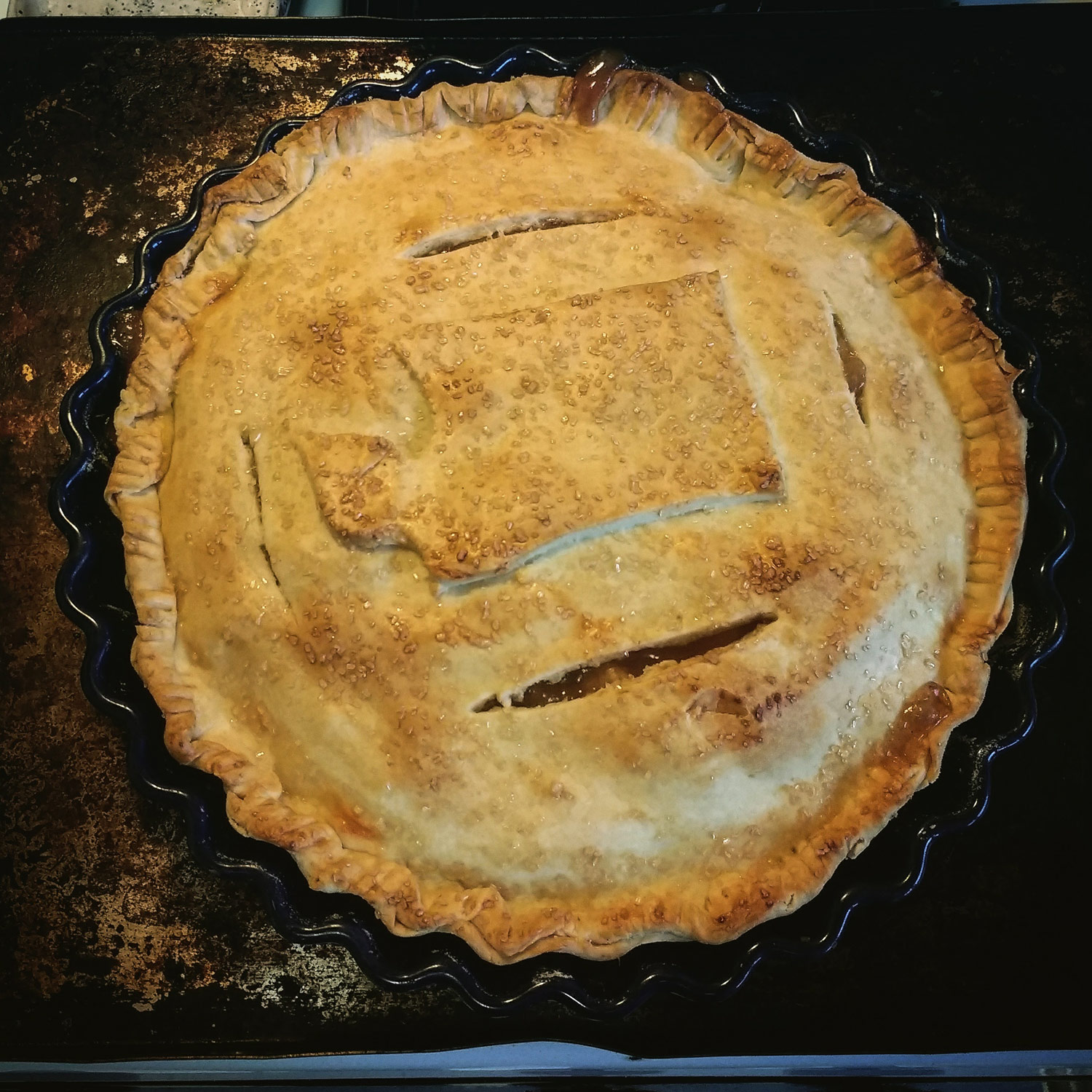
On this episode, producer Jeff Emtman met the couple for a dinner of Pakistani biryani and apple pie, just three days before their move from Seattle, to Medford.

Music: Lucky Dragons, Serocell, The Black Spot, AHEE
Rate and/or review HBM on iTunes


HBM072: Ant God

Episode art by Jeff Emtman

Episode art by Jeff Emtman

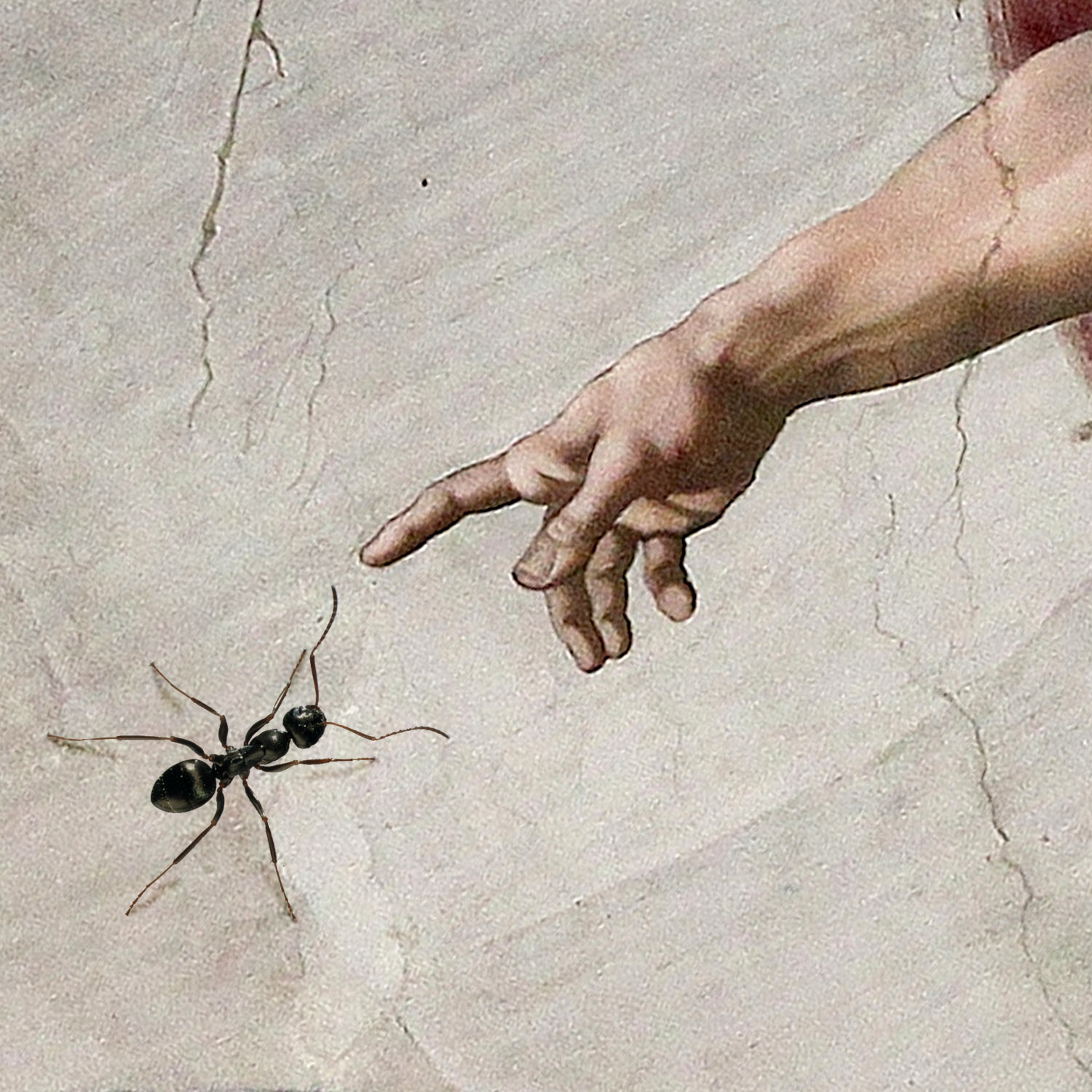
Ant God
Here Be Monsters Podcast
 

As far as gods go, Jacob Lemanski is more tepid than most.  Despite his omniscience, he feels unequipped to deal with the ethical decisions required of him.

Content Note: this episode contains a description of a domestic assault.

Jacob is the owner of AntLife, a company that makes large ant farms.  In one of his prototype farms, he was experimenting with different soil types.  One of his formulations caused a problem: tunnel collapse.  And during a cave-in, one of his ants became trapped in a small underground cavern, just inches from the surface.

In this episode, Jacob recalls his personal history with both passivity and intervention, and tries to figure out what’s best for his ants.  

Producer: Jeff Emtman
Editor: Bethany Denton
Music: The Black Spot


Jacobs ants live in an environment lit by programmable LEDs

Jacob’s newest ant farms have photos of nebulae as their backdrop.

wet-slop-plop.wav (Among Other Sounds)

b012.jpg
wet-slop-plop.wav (Among Other Sounds)
Here Be Monsters Podcast
 

There are about 10,000 files in the Here Be Monsters sound library.   HBM producer Jeff Emtman has been recording, synthesizing and downloading them since way back before this show started.  And of these thousands of sounds, there’s a tiny subset of them that just keep winding up on podcast episodes.

On this interstitial episode, Jeff plays back some of these heavily-used sounds and asks whether they occur because of an inherent goodness, a force of habit, or some kind of weird nostalgia he feels for the early days of the podcast. 

The site Jeff often downloads sound from is FreeSound.org (see Jeff’s download history).  A big thank you to the many recordists there who volunteer their work to the public domain, especially Felix Blume, a sound artist and sound engineer who is responsible for many of the site’s best recordings.


HBM069: Redwoods of the In-World

HBM069.jpg
Redwoods of the In-World
Here Be Monsters Podcast
 

Ariadne, Jacqueline, North, and others unnamed are all part of the same system.  They share a single body.  They take turns “fronting” the body, controlling it.  And when they’re not fronting, the system members are free to roam an infinite landscape, a pocket reality that they call the “in-world”.

Content Note: Language and a description of a sexual assault.

Together, they go to work every day, spend time with friends and lovers, go to shows, play video games, and live many aspects of a typical life. But when multiple people with varying interests, social skills, and gender identities share a single body, some things are tough.  It’s tough to live in a world that doesn’t understand you, doesn’t know your secrets, or just wants to diagnose you.

The system members refer to their living situation as being “plural” or “multiple”.  Psychiatry calls similar situations Dissociative Identity Disorder.  The system members don’t identify with this diagnosis, as it requires the multiplicity to be hindrance.  They say it’s the opposite of a hindrance--it’s what lets them survive.

Another perspective on multiplicity can be found in the work of philosopher John Perry.  1978, he published a paper called A Dialogue on Personal Identity and Immortality which critiques popular assumptions of personal identity.  This writing was brought to our attention by Barry Lam, the producer of a soon-to-be released philosophy podcast called Hi-Phi Nation.  

We mailed our spare recorder to the system’s home in the spring of 2016.  Over the course of several months, system members created diary entries and field recordings to share the world that Ari calls too “bright and loud”.

Producer Jeff Emtman did an interview with Jacqueline, where she also described the building process of the in-world, including the creation a spot of reverence within it--a grove of redwood trees modeled on a forest near Oakland.

One day, Jacqueline hopes to move from the city to the wilderness and have dogs.  Jacqueline said that there are no current plans to integrate the system.

We found out about Ari, North, Jacqueline et al because we asked for listeners to tell us their secrets.   If you have a secret you’d like to share, please get in touch.

This episode was produced by Jeff Emtman and Bethany Denton.  Nick White is HBM’s editor at KCRW.  

Music: The Black Spot


HBM067: Dispatches From PestWorld 2016

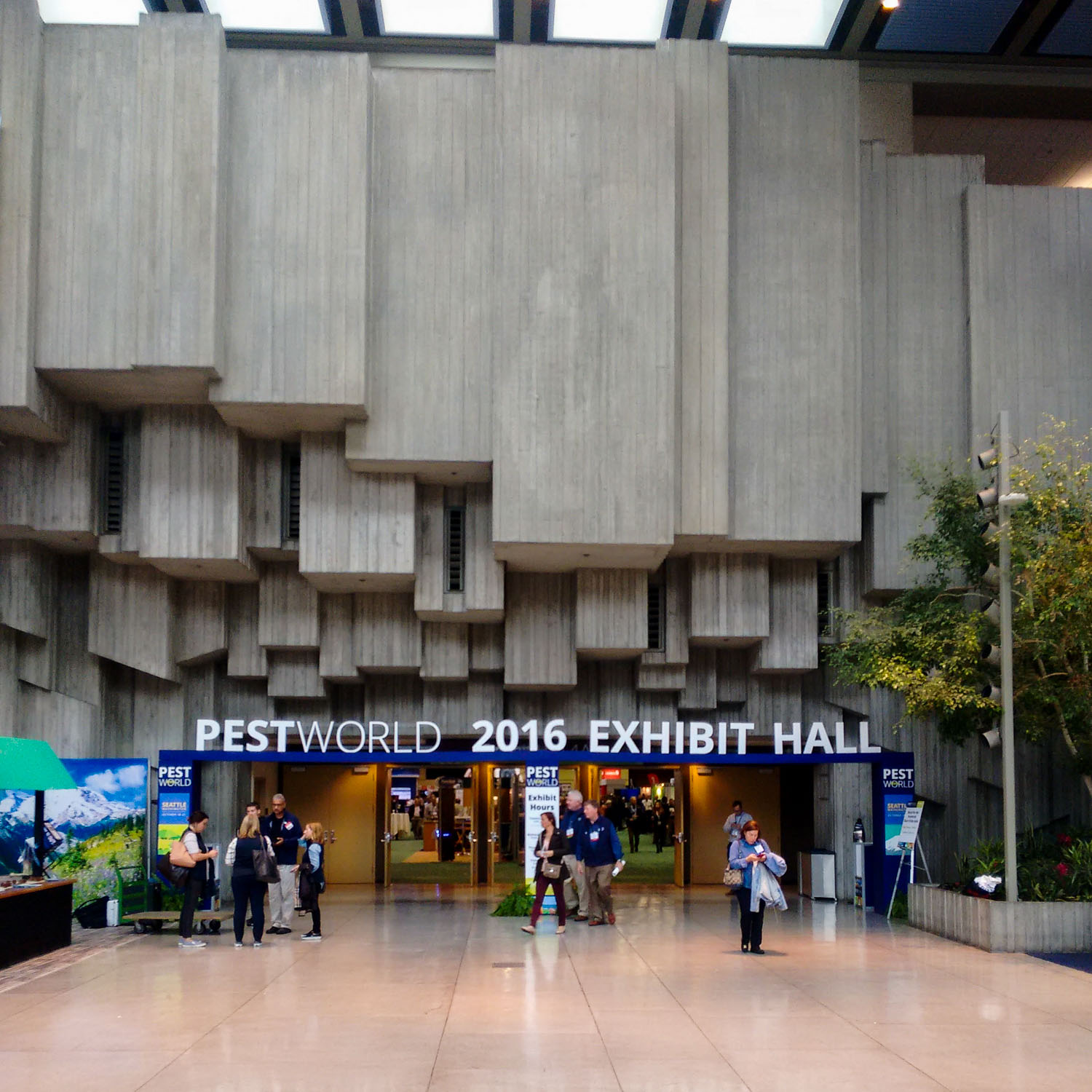
Pestworld 2016 in Seattle, Washington.  Photo by Jeff Emtman.

Pestworld 2016 in Seattle, Washington. Photo by Jeff Emtman.

Dispatches from PestWorld 2016
Here Be Monsters Podcast
 

Feeling anxiety about the American presidential election, HBM host Jeff Emtman took a trip to a place he hoped to be insulated from politics: PestWorld 2016, the largest American gathering of pest management professionals. Jeff has always liked bugs and pest animals, so it was a miniature vacation.

He talked with the following attendees about the tools and the philosophy of pest management:

Rose Eckhart of ZappBugg bed bug heaters
Carlita Turk of TAP Pest Control Insulation
David Walters of HY-C Home Solutions
Evan Bruce of Heat Assault glycol bed bug products
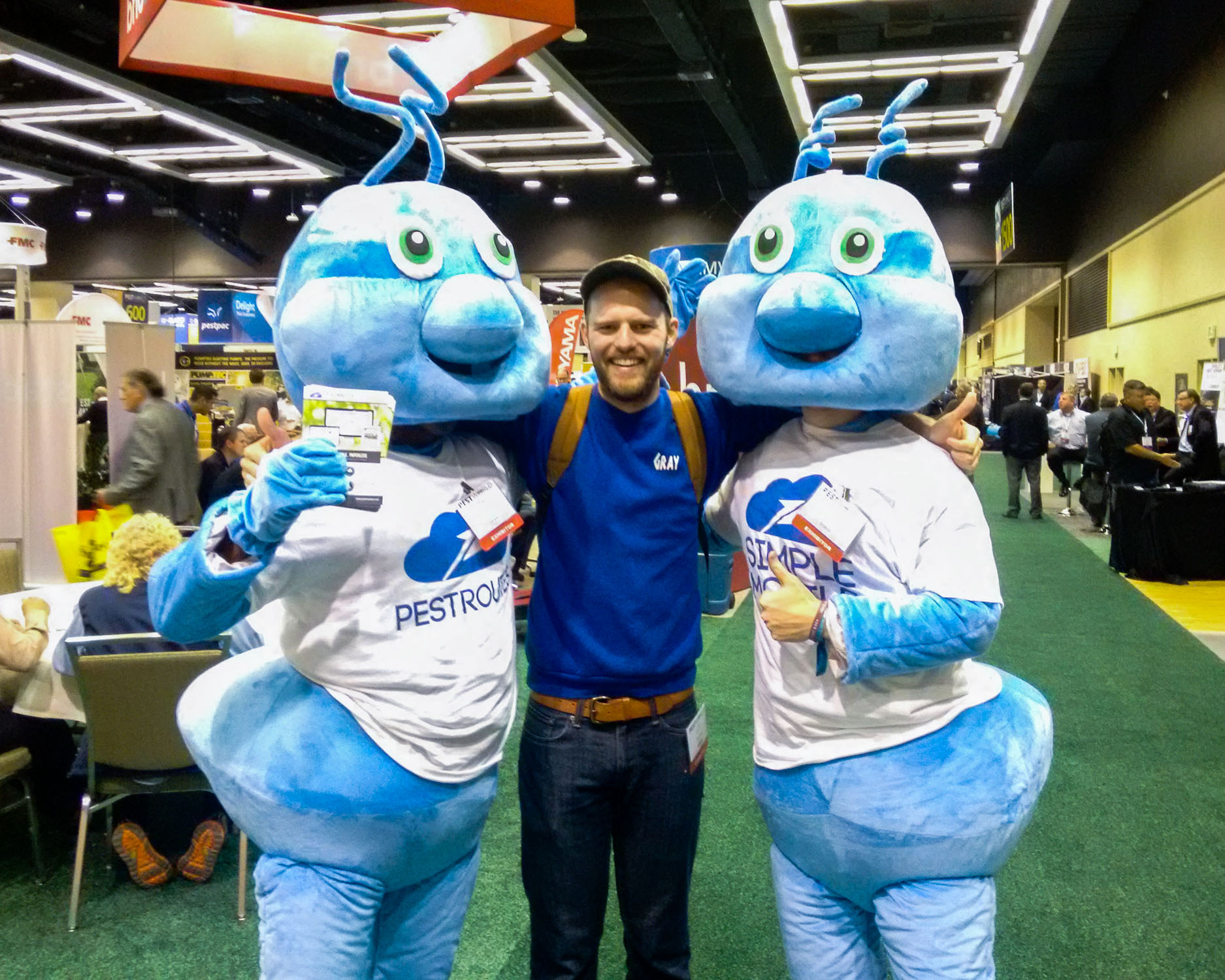
Roger Johnson and Evan Church of Pest Routes
Sheree Swindle of Bed Bug Mutts with Lily Loo
Bill Robinson of B&G Curtis Dyna-Fog sprayers and foggers
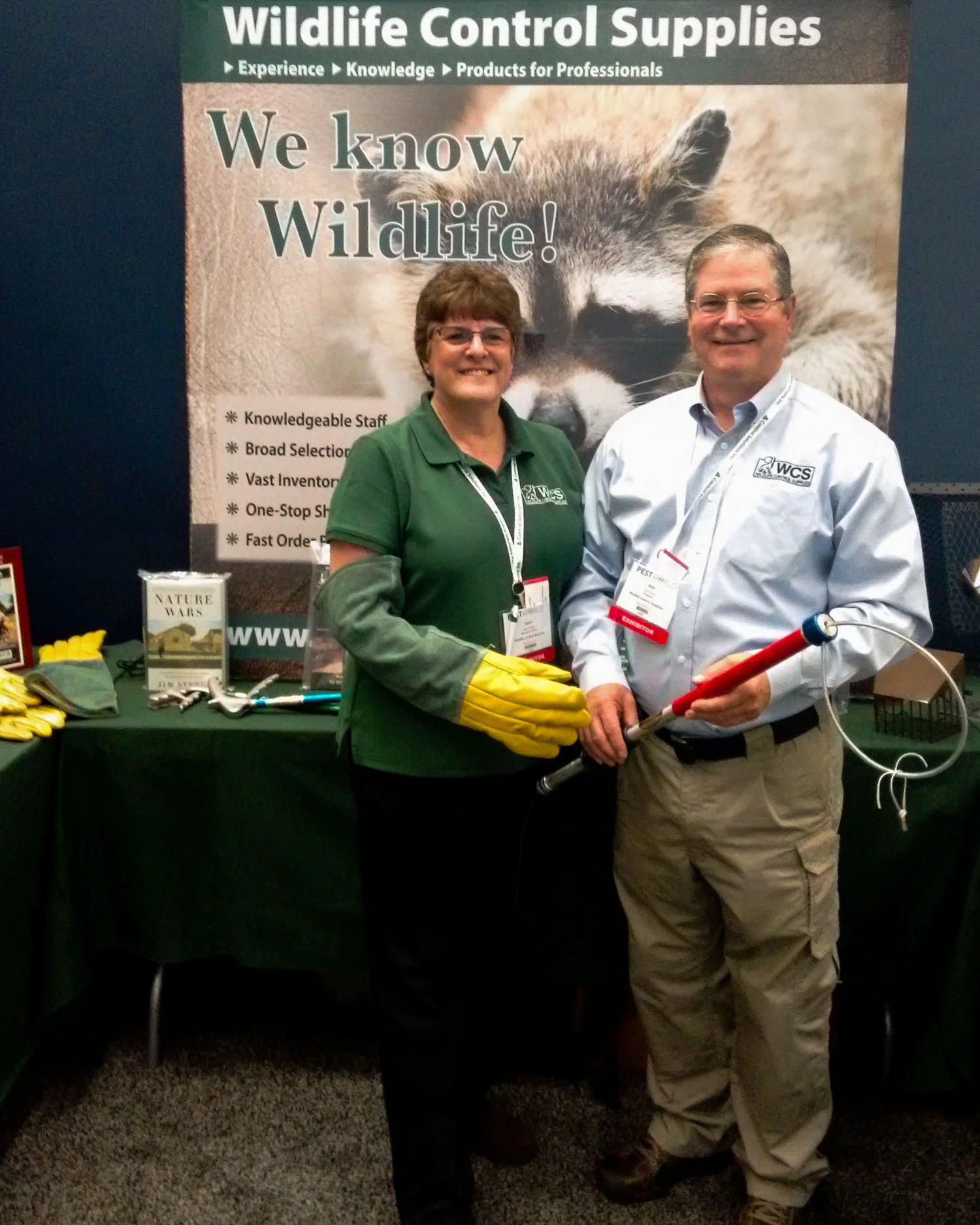
Alan Huot of Wildlife Control Supplies outfitter for wildlife professionals

Jeff Emtman produced this episode with help from Bethany Denton and Nick White.

Music: Serocell, Flowers


Rose Eckhart of ZappBug explains the basics of bedbug infestations.

The Golden Eagle mosquito fogger from Curtis Dynafog.

Alan Huot of Wildlife Control Supplies demos wildlife baits.

HBM065: We Pay Them In Meat

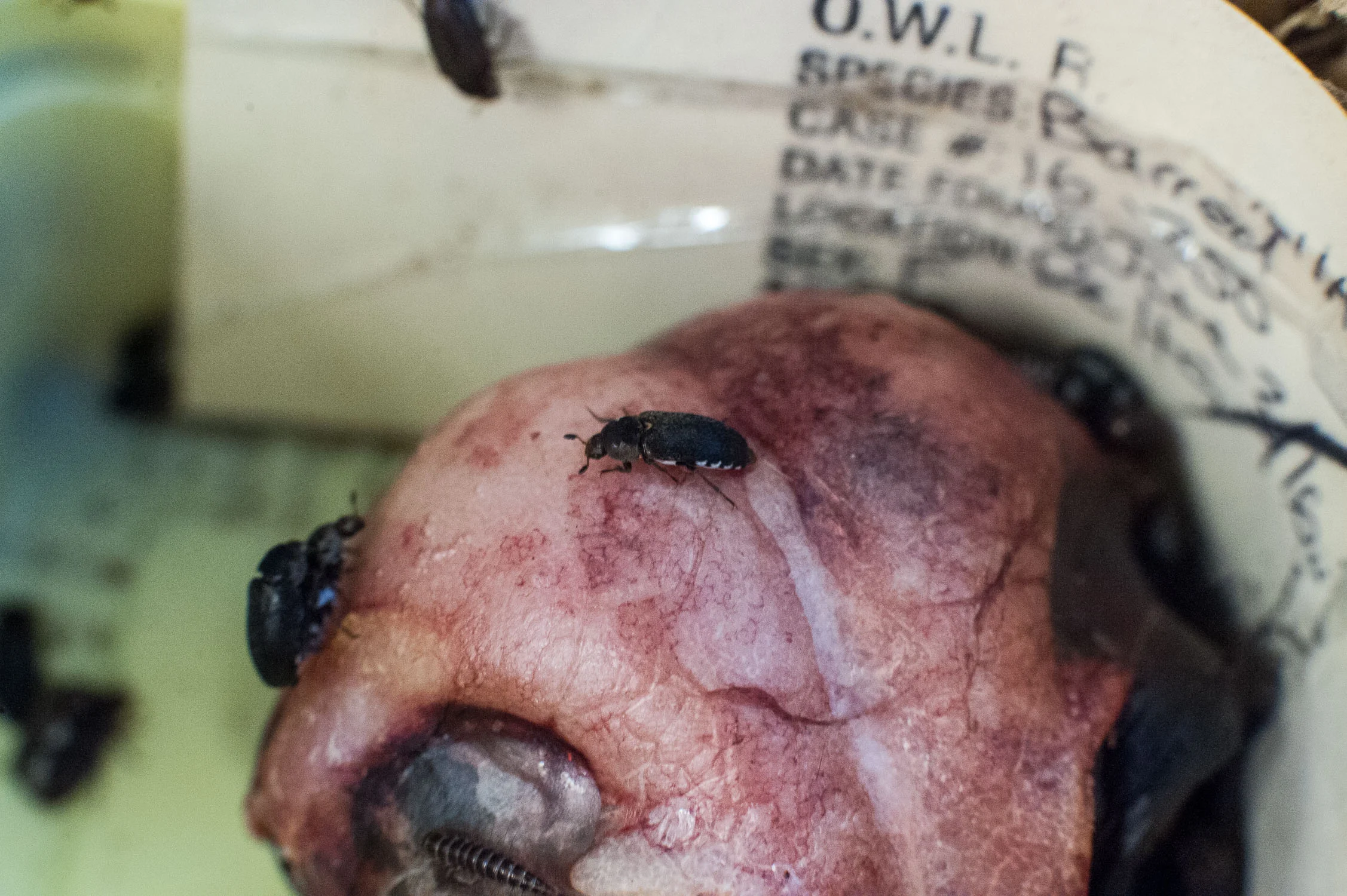
Owl skull with a flesh eating beetle.  Photo by Jeff Emtman.

Owl skull with a flesh eating beetle. Photo by Jeff Emtman.

We Pay Them In Meat
Here Be Monsters Podcast
 

Walk through any natural history museum and you’ll see rows of effortlessly clean animal skeletons.  Chances are you're looking at a strange form of human/insect symbiosis happening in the museum’s back rooms.

Preparing an animal’s skeleton for display is incredibly labor intensive for human hands.  So curators have turned to a family of beetles with millennia of experience.

The dermestidae family of beetles have followed humans since our early history.  They’re opportunistic eaters, and they like the things we like: grains, bacon grease, leather, silk scarves, books, carpets.  And as early humans traveled, the beetles came with, colonizing across the globe.

The majority of humans’ relationship with these beetles is and has been contentious, as they tend to wreak havoc on human possessions.  They’re often exterminated as pests. 

But several species of the dermestidae family have a taste for dead flesh. Including dermestes maculatus, aka. “The Hide Beetle”.  And for this reason, curators have enlisted their help as “museum volunteers.”

At least, that’s what Chris Stinson of the Beaty Biodiversity Museum in Vancouver, British Columbia calls them.  He’s the Curatorial Assistant of Mammals, Reptiles, and Amphibians and he approximates that he has 20,000 of these volunteers to prep the museum’s collection. 


In this episode, Here Be Monsters producer Jeff Emtman smells the beetle tank, listens to them eat an owl skull, and holds a real flesh-eating beetle.*

Jeff Emtman produced this episode, with help from Bethany Denton and Nick White.

Music: The Black Spot

Happy Birthday Paul.  We don’t know when your birthday actually is, but we hope it’s a good one...this year and every other.

*Due to dermestes maculatus’ preference for dead foods, they’re perfectly safe to handle, unless you’re a wild turkey (and if you’re actually reading this, you probably are).